🌀Is Art Responsible for What It Manifests?
I have a confession: I once read Nabokov’s Lolita to my newborn daughter.
Not the notorious passages. At least I don’t think so. When she was tiny, I had a habit of reading aloud whatever I happened to be reading while rocking her to sleep. I wanted to put beautiful language into her brain. At the time, I was reading Nabokov for the first time and marveling at the wit, the precision, the sheer dexterity of the sentences. My wife raised an eyebrow, reasonably enough, but I remember thinking the language was the point.
Then, not long ago, my wife and I were listening to recaps of the Jeffrey Epstein case, and she stopped me in the hallway with a fact I somehow hadn’t known: he had named his plane the “Lolita Express.”
At first, I reacted with a cynical eye-roll. Of course a monstrous person would seize on a great work of art and drag it into his own ugliness. Of course a book like Lolita would be misread, misused, made complicit in the mind of someone grotesque enough to want that kind of sanction.
But my wife wasn’t laughing.
Hours later, after a long and not especially easy conversation, I understood what she was really asking. She wasn’t asking whether difficult art should exist, or whether writers should avoid darkness, sexuality, trauma, or moral danger, or whether a novel is to blame for the crimes of a predator. Those are easier questions, or at least more familiar ones.
The question she was asking was slipperier and more uncomfortable:
She was asking whether bringing something vividly to life is ever wholly separable from giving it shape, heat, and permission in the world. Not whether Nabokov was to blame for Epstein, but whether animating certain kinds of consciousness has consequences beyond the page. She was especially disturbed that I had brought that consciousness near our daughter, even unintentionally. The argument lasted into the next day, and what unsettled me most was that I could not fully explain why I disagreed.
St. Ulphia’s Dead contains passages that are risky, difficult, and at times brutal. There are explorations of sexuality. There is trauma. There are moments where the two collide in ways that are not meant to be easy. My wife has challenged some of those choices directly, especially because she knows when I wrote much of the book: while our daughter was tiny, asleep nearby. She has asked, plainly, why certain things needed to be there.
For years, I’ve had a ready answer. Art, at its best, gives voice to what is hidden. It shines light into the darker elements of our souls and societies. My wife gave us our family mantra: the purpose of life is to be moved and enchanted. And often, to be genuinely moved or enchanted, you have to emerge from some darkness.
I still believe that. But I no longer think it exhausts the question.
There is a difference between depicting darkness and being careless with it—between refusing to look away and unconsciously feeding the thing you think you are interrogating, between making something provocative and making something responsible.
I don’t think Nabokov is responsible for Jeffrey Epstein. I don’t think Lolita licensed his crimes, and I don’t think novels can be judged by the depravity of their worst readers. But I also do not think art enters the world as a sealed object whose moral life ends at publication. Art is not solely expression. It becomes atmosphere. Permission. Warning. Distortion. Illumination.
Works of art do not just depict the world. They alter the way the world is imagined and lived.
Which means intention matters. Precision matters. Moral attention matters.
Art is neither innocent nor inert. A novel can stage violence without endorsing it. It can depict depravity without celebrating it. It can animate a consciousness without agreeing with it. Literature depends on that freedom. But that freedom does not absolve the maker from asking what kind of imaginative force the work releases, what it glamorizes despite itself, and what habits of feeling or seeing it may be helping to train.
These are not censorious questions. They are questions of intention and craft: of attention, proportion, and the kind of seeing a work trains in the reader. In the works I value most, violence is not entertainment so much as an act of witnessing—not just giving voice to suffering, but saying, in effect, I see you; you exist. Not just in the mind but in the body, in the heart. That matters, now more than ever.
What I was trying to do in St. Ulphia’s Dead
This is part of what I now see St. Ulphia’s Dead as trying to investigate.
Not taboo or transgression for its own sake, or the thrill of making readers uncomfortable. I was interested in the place where social narratives, trauma, desire, belief, and fear harden into truths people mistake for the self. The book questions taboo partly in order to question the stories a culture tells about what is normal, what is monstrous, what is pure, what is contaminated, what counts as reason, what gets dismissed as madness. It is interested in the survival mechanisms people build—individually and collectively—and in how those mechanisms start to masquerade as identity, morality, even reality itself.

Beneath that is a simpler and more difficult question:
what is really me underneath the things that happen to me?
Underneath the stories I inherit, the injuries I adapt to, the explanations I cling to, the roles I perform to stay alive—what remains?
To investigate that question required both witnessing and invention: witnessing forms of violence and abuse, individual and systemic, and inventing alternative rituals, traditions, and explanations in order to ask whether the stories we take for granted are the only valid ones—or the most humane.
The book’s interest in possession, for instance, is not really about supernatural spectacle, or even the strange psychoses grouped under “culture-bound disorders,” so much as the unstable border between what possesses us and what we call ourselves.
We think we know what sick and healthy mean. We think we know what reasonable love looks like, what proper decorum around sex, death, grief, or awakening should be. But those standards emerge from particular fears, particular inheritances, particular social arrangements. Remove or alter those underlying assumptions, and other ways of being start to look imaginable.
When a writer enters dangerous territory—sexual trauma, taboo desire, collective fear, dehumanization, violence—what matters is not innocence. It is attention. What kind of seeing is the work performing? What kind of seeing is it rewarding? Is it exposing a fantasy, or merely reproducing it with better sentences?
The books that live in this danger
This question is hardly confined to Nabokov. Many of the books I care most about live in this territory, where the force of the work lies partly in its refusal to reassure us that depiction and endorsement are easily separable.
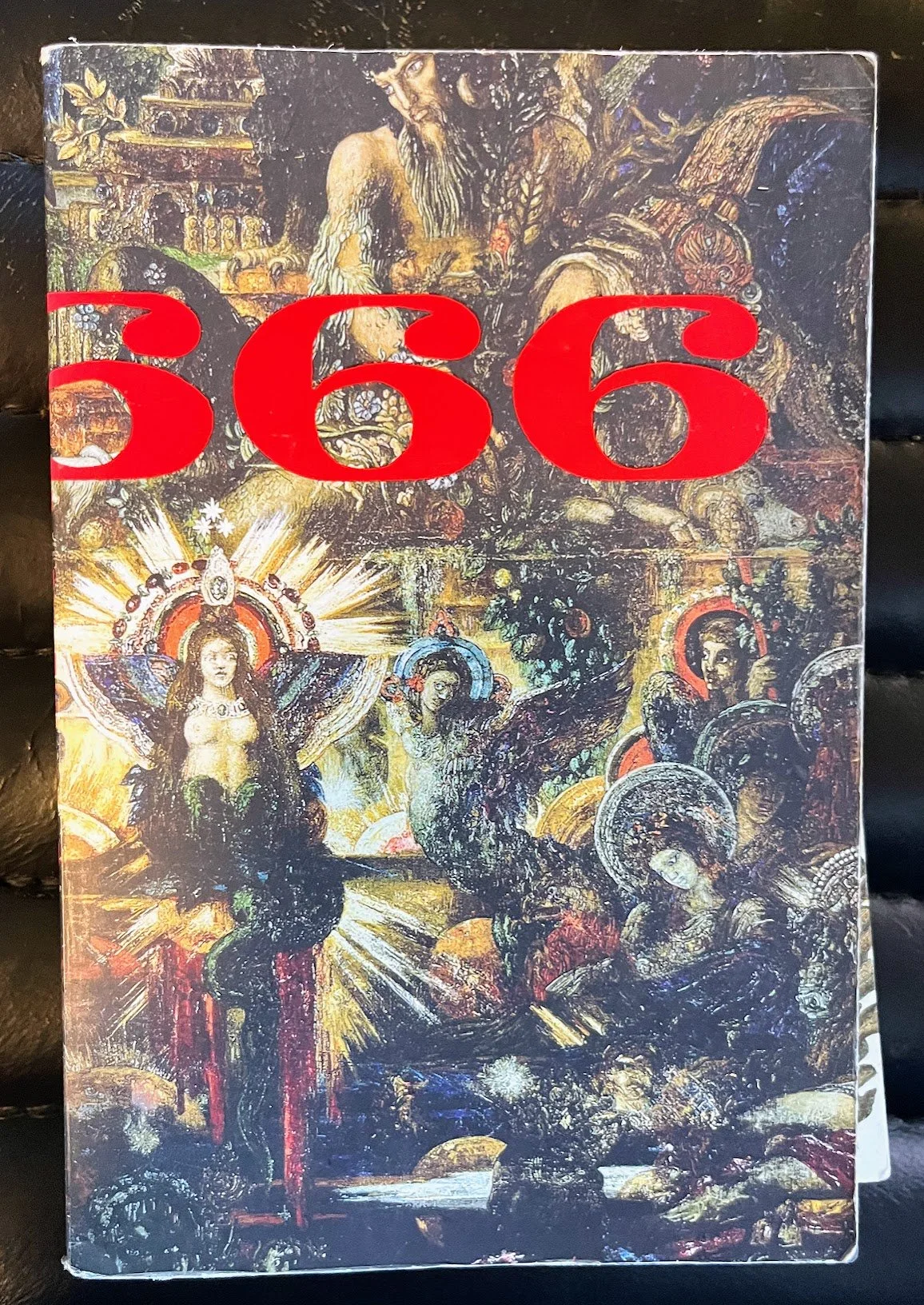
Bolaño’s 2666 comes to mind, because it puts literary beauty and horror so close together that each starts to stain the other.
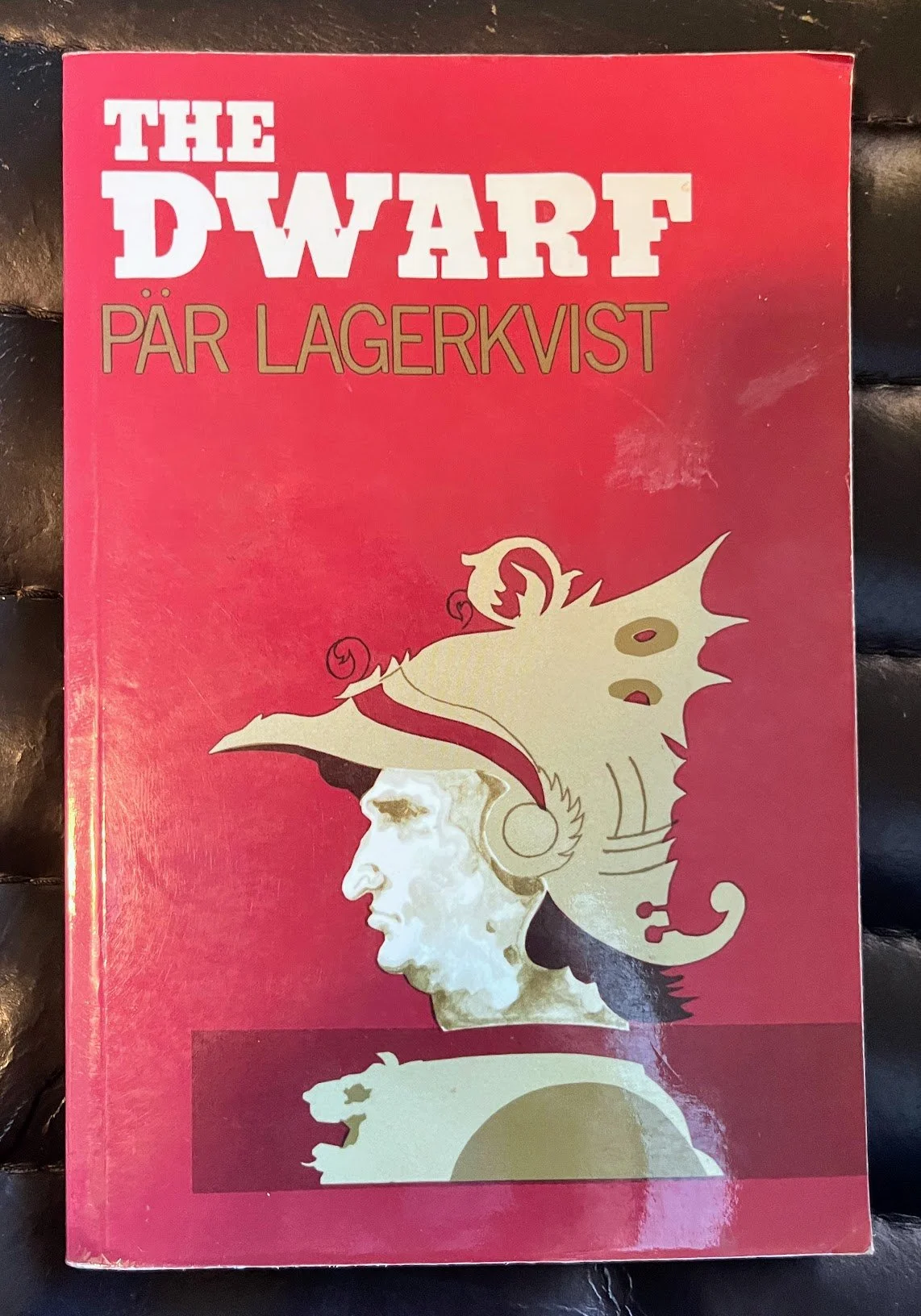
So does Pär Lagerkvist’s The Dwarf, whose narrator is repellent, lucid, petty, cruel, and unforgettable.
The novel does not excuse him, or provide the comfort of distance. It lets hatred speak in a voice so concentrated and intimate that the reader has to confront the possibility that giving monstrosity form and eloquence is never a neutral act.
A reader wrote to me after my newsletter on this subject and described the difficulty of “holding tolerance for intolerance,” of trying to remain open to beauty in art whose moral world is damaged or damaging. She mentioned bluegrass songs whose musical loveliness is entangled with lyrics that normalize domestic violence. Beauty does not become null because it carries the freight of a broken culture, but neither does beauty exempt it from scrutiny.
Likewise, “Art is not responsible for its readers” is true, but only partly true. No writer controls reception, and once made, a work enters culture where it can be flattened, fetishized, misread, and abused. But misreading does not absolve the artist in advance. Some works expose a fantasy while implicating the reader in its danger. Others simply enjoy the fantasy without interrogating what the work is doing, then mistake that ambiguity for depth.
That is part of what makes Lolita so troubling and so alive. It is not merely a novel about monstrosity. It is a novel that forces us to experience the aesthetic sophistication by which monstrosity seeks to charm, excuse, and transform itself. Its brilliance is inseparable from its danger. The novel does not become responsible for Epstein. But Epstein’s use of it reminds us that art’s imaginative power is never purely literary once it enters the bloodstream of culture.
The responsibility of circulation
That realization has changed the way I think not only about writing books, but about sending them into the world.
Publication is usually discussed in the language of publicity, platform, discoverability, reach. There is a familiar script for this: be everywhere, post constantly, build awareness through a dozen channels at once, repeat yourself until the market remembers you exist. More and more, it feels like a way of treating readers as impressions instead of people.
If art is not inert, then circulation is not neutral either. How a book travels, the context it enters, and the conversations around it all matter. Even a recommendation is a kind of ethical act: a way of saying, this imaginative object belongs in your brain now.
That is why, as St. Ulphia’s Dead approaches publication, I find myself less interested in visibility for its own sake than in connection. I want conversations about what is in the book. I want the work to find its way toward readers who will genuinely enter into its questions. My new publishing mantra is this:
How might I deeply reach one reader at a time?
I do not have a perfect system for that. I’m not even sure it scales, which may be part of the point. But I know it looks more like conversation than broadcasting: book clubs, salons, independent bookstores, thoughtful reviews, direct recommendations, memorable human connections.
To publish a book, then (at least for me) is to do more than express oneself. It is to release something into the imaginative commons. And that means the energy behind its release ought to carry the same intention as the book itself.
I still believe in difficult art. I believe in dangerous books, if by dangerous we mean books willing to enter the unstable territories of desire, fear, fantasy, cruelty, contradiction, and belief. I do not want literature scrubbed clean of risk.
But I do want writers (including myself) to ask more of ourselves than whether the material is bold, beautiful, or transgressive. I want us to ask what our work is summoning, and what kind of attention it gives to the forces it invites into the room.
Because the page is not nowhere.
And what we manifest there does not stay there.
